


Understanding Stroke: How It Affects Mobility and the Road to Recovery
A stroke happens suddenly, but its effects can last long after the emergency has passed. When blood flow to part of the brain is interrupted either by a blockage or a bleed, the brain cells in that area are deprived of oxygen and begin to die. This can affect movement, speech, memory and balance, depending on which part of the brain is involved.
For many people, the most noticeable changes after a stroke are physical: weakness, altered muscle tone, difficulty walking and challenges using the arm or hand. These changes can feel overwhelming but with the right rehabilitation and support, meaningful progress is possible.
How Stroke Affects Movement
Stroke can impact mobility in several ways:
Weakness or paralysis on one side of the body (hemiplegia)
Foot drop, where the front of the foot doesn’t lift properly
Spasticity, causing tight or stiff muscles
Contractures, where joints become fixed in a shortened position
Balance and coordination difficulties
Changes in gait, such as dragging a foot or hyperextending the knee
These challenges can make walking slower, less stable and more tiring. They can also affect confidence especially when everyday tasks suddenly feel harder.

The Role of Rehabilitation
Stroke recovery is a gradual process that involves physiotherapy, occupational therapy, speech therapy and often orthotic support. Rehabilitation focuses on:
Rebuilding strength
Improving balance
Restoring movement patterns
Managing spasticity
Supporting independence at home and in the community
Therapy can be delivered in hospital, at home or through telerehabilitation, depending on the patient’s needs. Regular reviews help ensure progress is monitored and goals remain achievable.

How Orthotics Support Stroke Recovery
Orthotics play a key role in helping stroke survivors move more safely and comfortably. They provide external support to guide movement, protect joints and reduce the effort required for walking or using the upper limb.
1. Managing Foot Drop
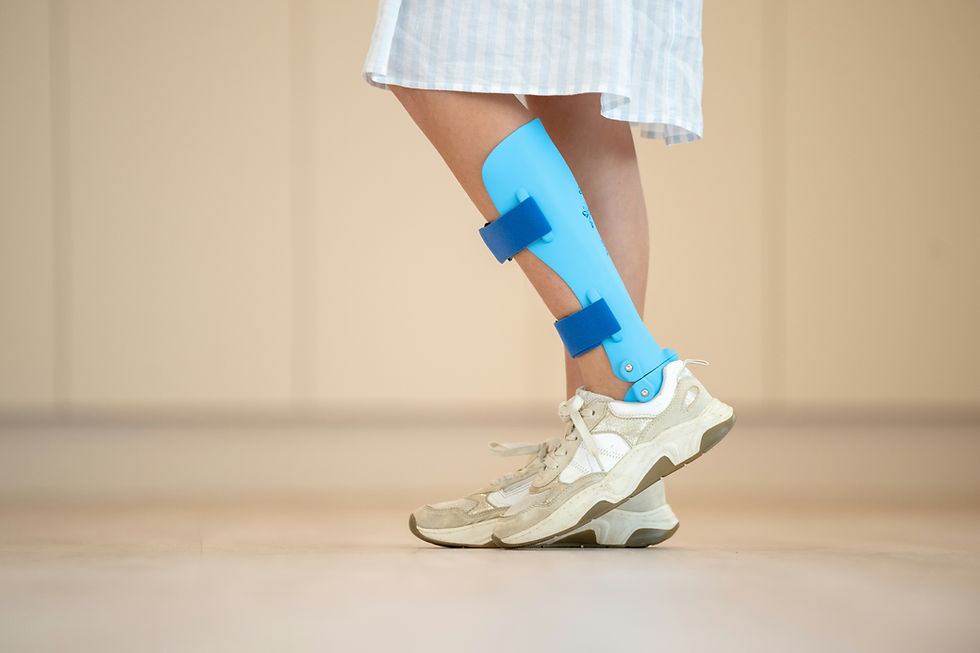
Foot drop is one of the most common mobility issues after stroke. An Ankle–Foot Orthosis (AFO) holds the foot in a neutral position so the toes clear the ground during walking. This improves stability, reduces tripping, and helps restore a more natural gait pattern.

2. Controlling Knee Instability
Weakness or altered muscle tone can cause the knee to hyperextend (genu recurvatum) or collapse inward (genu valgum). Orthotic devices from supportive AFOs to lightweight KAFOs help control alignment, reduce strain and improve confidence when walking.

3. Preventing and Managing Contractures
Spasticity can pull joints into stiff, uncomfortable positions. If left untreated, this can lead to contractures that limit movement and cause pain. Orthotic splints provide gentle, prolonged stretch to maintain range of motion and protect joints.
4. Supporting the Upper Limb
Weakness in the shoulder, elbow, wrist or hand can make daily tasks difficult. Upper‑limb orthoses help position the arm comfortably, reduce tightness and support functional movement during rehabilitation.

A Personalised Approach to Care
Every stroke survivor presents differently, which is why orthotic treatment begins with a detailed assessment of:
Muscle strength
Spasticity
Joint range
Gait pattern
Functional goals
Comfort and skin integrity
Modern orthotic clinics use tools such as gait analysis and 3D scanning to create devices that are precise, comfortable and tailored to each patient’s needs. As recovery progresses, orthoses can be adjusted to match changes in strength, tone and mobility.

Moving Forward With Confidence
Recovery after stroke is rarely linear but with the right support, people can regain independence, rebuild confidence and return to activities that matter to them. Orthotics are one part of that journey, helping stroke survivors walk more safely, reduce pain and feel steadier day‑to‑day.
If you or someone you support is experiencing mobility challenges after a stroke, our team can provide expert assessment and bespoke orthotic solutions designed to support comfort, stability, and long‑term recovery.



Comments